
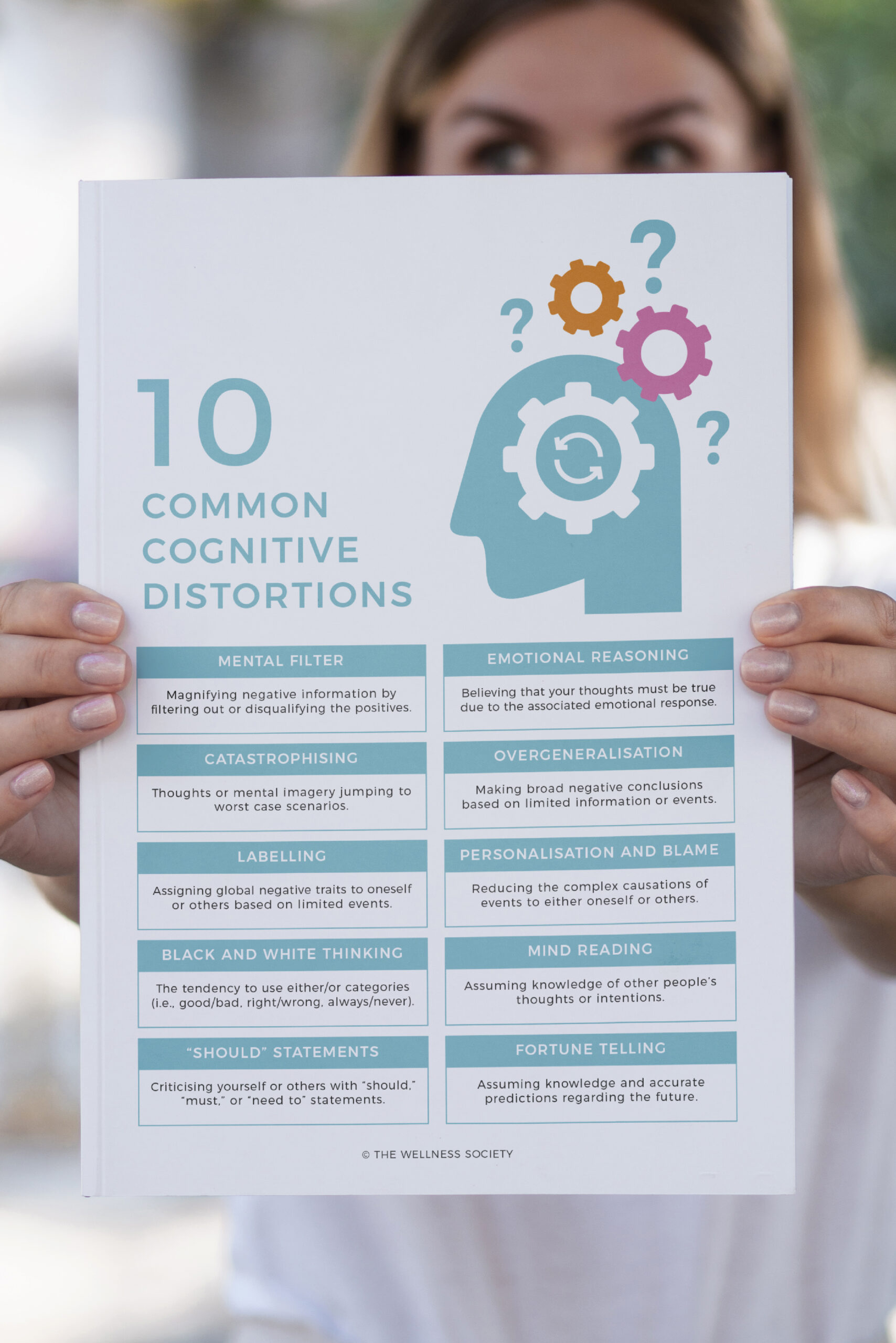
What Are Cognitive Distortions?
Cognitive distortions are patterns of thinking that consistently distort your perception of reality.
They often make situations seem worse than they actually are. While everyone experiences these thought patterns from time to time, they become problematic when they happen often and start affecting your mood and behaviour.
Recognising these unhelpful thinking habits is the first step developing a more balanced, realistic perspective.
Philosophical Roots
Aaron T. Beck, the father of CBT, explicitly cited philosophical roots when developing techniques for recognising and challenging cognitive distortions.
Stoic philosophers like Epictetus, Seneca, and Marcus Aurelius emphasised that it’s not events themselves that disturb us, but our judgments about them.
Epictetus famously said: “Men are disturbed not by things, but by the views which they take of things.”
This is directly related to what psychology now calls cognitive distortions. Stoics taught awareness and correction of distorted judgments to achieve inner calm – very much like modern cognitive behavioural therapy (CBT).
Why Understanding Cognitive Distortions Is Helpful
Understanding cognitive distortions can significantly improve mental wellbeing. Here’s why:
- Reduces emotional intensity. Once you identify distorted thinking, it’s easier to step back and respond calmly rather than react impulsively.
- Improves decision-making. Seeing situations more objectively helps you make choices based on reality, not exaggerated fears.
- Enhances relationships. Being aware of distortions like mind-reading can prevent unnecessary conflict with others.
Ultimately, understanding your cognitive distortions helps you gain clarity, control, and confidence in navigating life’s challenges.
How to Start Noticing Your Cognitive Distortions
Noticing cognitive distortions takes practice, but you can begin with a few simple strategies:
- Keep a journal. Write down situations that triggered strong emotions and the thoughts that accompanied them. Reviewing them can reveal recurring patterns.
- Label the distortion. Assign a label to the thought, like “catastrophising” or “overgeneralisation.” Naming it helps you separate the thought from reality.
- Practice mindful awareness. Pause and observe your thoughts without judgement. Mindfulness can reveal distortions before they spiral and hijack your mood.
- Ask yourself questions. When you notice a cognitive distortion, ask: “What’s the bigger picture?”
- Reframe. Once you identify a distorted thought, reframe it in a balanced way, e.g., “I didn’t succeed this time, but I can learn and improve.”
By consistently noticing and challenging these patterns, you gradually train your mind to think more realistically and respond to life’s ups and downs with greater calm and confidence.
Use the form below to download our free PDF guide for a breakdown of the most common cognitive distortions so you can familiarise yourself with them. This is the first step towards recognising unhelpful thought patterns and building a more balanced, resilient mindset.